Page Three

Why Does Taiwan Need M-1 Abrams Tanks?

Is this just a total waste of money or a powerful weapon to stop China if they invade?

The National Interest
Date: November 23, 2019  
By: Michael Peck


The U.S. State Department has approved a Taiwanese request to buy 108 M-1A2T Abrams tanks. The U.S. Congress still has to approve the $2 billion sale, which includes fourteen M88A2 Hercules tank recovery vehicles, and several thousand rounds of 120-millimeter shells of various types.

“The proposed sale of this equipment and support will not alter the basic military balance in the region,” stated the State Department’s Defense Security Cooperation Agency. China, which considers Taiwan to be a renegade Chinese province, most vehemently disagrees.

But there is a more practical question: of all the weapons that Taiwan would need to defend itself against a Chinese invasion, should main battle tanks be at the top of the list?

First, Taiwan is an island. To forcibly conquer Taiwan, China will have either bombard it into submission with missiles and aircraft, or conduct an amphibious and airborne invasion across the 110-mile-wide Taiwan Strait. If China can land a sizeable force on Taiwan, then it has achieved sufficient air and naval superiority in the face of Taiwanese—and quite possibly U.S.—defenses.
[FULL  STORY]

‘Defector’ just a criminal and fraud: Beijing

RTHK
Date: 2019-11-23

The defector said China Innovation Investment was a front for mainland intelligence operations in the SAR. Photo: AP

Chinese police said on Saturday that a man described in foreign media as a Chinese spy who defected to Australia with a trove of intelligence on Beijing's political interference operations in Hong Kong and overseas is an "unemployed" fraud fugitive.

Wang Liqiang, 26, was found guilty of automobile import fraud in 2016 and given a suspended 15-month prison sentence by a court in east China's Fujian province, Shanghai police said in a statement on an official social media account.

His Chinese passport and Hong Kong resident document were "forged", police said, adding that authorities were "further investigating the case."

Earlier, the Nine network newspapers reported that Wang told ASIO – the country’s counterespionage agency – that he was involved in several operations including the kidnapping of a Hong Kong booksellers in 2015.    [FULL  STORY]

Taiwan TV stations reject defector’s allegations of China funding

CTV, CTi-TV and TVBS say they would never accept funds of an unclear origin

Taiwan News
Date: 2019/11/23
By: Matthew Strong, Taiwan News, Staff Writer

TAIPEI (Taiwan News) – Three Taiwanese television stations denied accusations by a Chinese defector to Australia Saturday (November 23) that they had received funds from China to influence free elections on the democratic island.

William Wang (王立強), a former spy, told Australian media that China had paid Taiwanese TV stations TVBS, CTi-TV and CTV to broadcast news unfavorable to Taiwan’s government in order to make it lose the January 11, 2020 presidential and legislative elections.

The three broadcasters denied the allegations and demanded corrections from other media, while threatening to consider legal action if their demands were not met, the Central News Agency reported.

In a statement, CTi-TV said it had never accepted money from unclear sources, while its books had always been reviewed by accounting services conform to the law.    [FULL  STORY]

Taiwan to host international transportation safety meeting in 2022

Focus Taiwan
Date: 2019/11/23
By: Wang Shu-fen and Lee Hsin-Yin


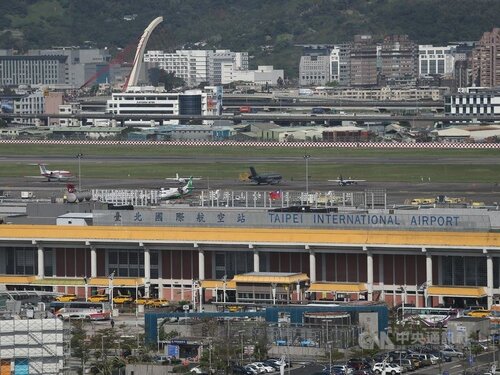
Taipei, Nov. 23 (CNA) Taiwan will host the annual meeting of the International Transportation Safety Association (ITSA) in 2022, which is expected to boost the country's global visibility, a transportation official said Saturday.

The meeting of ITSA, an international network of heads of independent safety investigation authorities, will bring experts from across the world to exchange their views and experiences in improving transportation safety, according to Taiwan Transportation Safety Board (TTSB) head Young Hong-tsu (楊宏智).

The last and only time Taiwan held an ITSA annual general meeting was in 2010, in the capacity of the Aviation Safety Council (ASC), Young said.

The ASC was transformed into the TTSB in August to better handle major transportation accidents not only in the air, but on railways, waterways and highways in Taiwan.    [FULL  STORY]

Diseases added to autonomy law

Taipei Times
Date: Nov 24, 2019
By: Staff writer, with CNA

Eleven rare diseases are to be added to the medical conditions covered by the Patient Right to Autonomy Act (病人自主權利法), the ministry announced on Friday last week.

The act, which went into effect on Jan. 6 and is the first of its kind in Asia, gives people the right to decide in advance what medical treatment or healthcare option they will accept if they are terminally ill, are in an irreversible coma or a permanent vegetative state, have advanced dementia or meet other conditions announced by authorities.

Such patients are entitled to terminate life-sustaining treatment, as well as artificial nutrition.

As part of the act’s implementation and after a series of meetings with experts over the past year, the ministry has named 11 rare diseases — multiple system atrophy, Duchenne muscular dystrophy, hereditary epidermolysis bullosa, Huntington disease, limb-girdle muscular dystrophy, nemaline myopathy, spinocerebellar ataxia, spinal muscular atrophy, amyotrophic lateral sclerosis, cystic fibrosis and primary pulmonary hypertension — as conditions that are unbearable or incurable.
[FULL  STORY]

Taiwan universities open doors to students from Hong Kong

Radio Taiwan International
Date: 22 November, 2019
By: Leslie Liao

Taiwanese students returning to Taiwan from Hong Kong

Universities in Taiwan are opening their doors to students from Hong Kong, allowing them to continue their studies despite school closures back home.

Taiwanese students enrolled in Hong Kong universities are returning from the territory early. That’s because Hong Kong schools have ended their semester early. The reasons for the school closures? Weeks of escalating clashes between police and protestors, and resulting safety concerns.

As unrest continues, a return to Hong Kong is looking more and more unlikely for many. This has prompted students to start applying to continue their studies in Taiwan instead. Universities here have received over 600 applications from those currently studying in Hong Kong.

National Taiwan University has received over 90% of these applications, as many try to get into its non-degree visiting student program. Over half of the Hong Kong-based students looking to get into this program are Taiwanese. A further 168 are Hong Kongers; and the remainder comes from China and other countries.    [FULL  STORY]

China-Taiwan tensions overshadow run-up to Golden Horse Awards

What impact has the Chinese boycott of Taiwan’s Golden Horse Awards had on nominations and the Chinese-language filmmaking industry?

Screen Daily
Date: 22 November 2019
By: Silvia Wong

SOURCE: SCREEN FILE
‘SUK SUK’, ‘DETENTION’, ‘WET SEASON’

It came as no surprise that not a single film from China was on the nominations list of Taiwan’s Golden Horse Awards when they were announced in October. The Chinese government had issued a boycott order in August, banning all mainland Chinese films and personnel from entering or attending what are considered to be the Chinese Oscars.

Still, the mass no-show is unsettling: it is the first time no Chinese films have been nominated since 1996 when Jiang Wen’s In The Heat Of The Sun became the first film from China to take part in the awards. Since then many top Chinese filmmakers have been garlanded, including Joan Chen, Feng Xiaogang, Lou Ye, Jia Zhangke and Zhang Yimou.

The boycott is due to political tensions between the Chinese government and the democratically elected Taiwanese government over the long-disputed autonomy of the island state, which is not recognised by China. The tensions have intensified ever since a young Taiwanese prize-winner briefly mentioned on stage at last year’s awards her hopes for Taiwan to be treated as an independent entity, and because of the patriotic fervour gripping China this year during its 70th anniversary celebrations of the founding of the People’s Republic of China.

All the events under the Golden Horse banner have come under fire, including the Golden Horse Film Festival, Golden Horse Film Project Promotion and the Golden Horse Academy. Even Kaohsiung Film Festival, which ran in October separately as an initiative of the Kaohsiung Film Archive in southern Taiwan, did not have an entry from China.    [FULL  STORY]

Taipei Metro inaugurates info kiosks at 5 major stations

Kiosks provide easy access to wealth of info needed by foreign tourists

Taiwan News
Date: 2019/11/22
By: Huang Tzu-ti, Taiwan News, Staff Writer

Information kiosks. (Taipei Metro photo)

TAIPEI (Taiwan News) — The Taipei Metro system has added a new feature to help passengers travel around the city with ease — the “Metro e Touch” information kiosks.

The digital screens are available at MRT Taipei Main Station, Zhongshan Station, Ximen Station, Dongmen Station, and Xinbeitou Station, according to the Taipei Rapid Transit Corporation. The stops were selected for their high volume of passengers, the company said.

Features of the kiosks include an MRT route map, introductions of stations, station locations, train schedules, ticket info, bus transfer info, nearby stores, YouBike locations among others. The information comes in four languages: Chinese, English, Japanese, and Korean.

As a measure to better serve foreign tourists, Taipei Metro inaugurated the e-Shops last month at MRT Taipei Main Station and Ximen Station. The facilities allow riders to purchase 13 types of metro pass in 12 languages through 11 payment methods, from cash to credit card and mobile pay.
[FULL  STORY]

Taiwan allows patients of 11 rare diseases decision-making power

Focus Taiwan
Date: 2019/11/22
By: Chang Min-hsuan and Elizabeth Hsu

Taipei, Nov. 22 (CNA) Taiwan's Ministry of Health and Welfare (MOHW) on Friday included 11 rare diseases in the clinical conditions under which the Patient Right to Autonomy Act is applicable, giving those suffering from such illnesses the right to decide whether to continue life support or other treatment.

The Act, the first of its kind in Asia, came into effect on Jan. 6. It offers people the right to decide in advance what medical treatment or health care they accept when they are terminally ill, in an irreversible coma, in a permanent vegetative state, suffering from severe dementia, or in other disease conditions that the authorities determine are unbearable or incurable.

Such patients are entitled to the right to terminate life-sustaining treatment, as well as artificial nutrition and hydration, under the Act.

As part of its implementation of the Act, the ministry included 11 rare diseases in the definition of the disease conditions determined to be unbearable or incurable, after a series of expert meetings over the past year.    [FULL  STORY]

Students develop machine to detect swine fever virus

Taipei Times
Date: Nov 23, 2019
By:: Tsai Tsung-hsun, Wu Hsin-tien and Jake Chung  /  Staff reporters, with staff writer

National Chung Cheng University said it is getting ready to file patents for a device developed by its

Students from National Chung Cheng University demonstrate the rapid diagnostic test for screening African swine fever in this undated picture.
Photo copied by Tsai Tsung-hsun, Taipei Times

students that detects the African swine fever virus.

The invention won silver at this year’s International Genetically Engineered Machine Competition, which took place this month, the school said on Thursday.

The goal of the competition was to create localized solutions for local problems.

Team leader Wang Wei-cheng (王瑋晟) said the best way to prevent the virus from spreading is to shorten the time it takes to diagnose it.    [FULL  STORY]